Case 6 of 40
Check recent medicine changes when assessing delirium
Example case for staff education
Select an illustration to enlarge it.
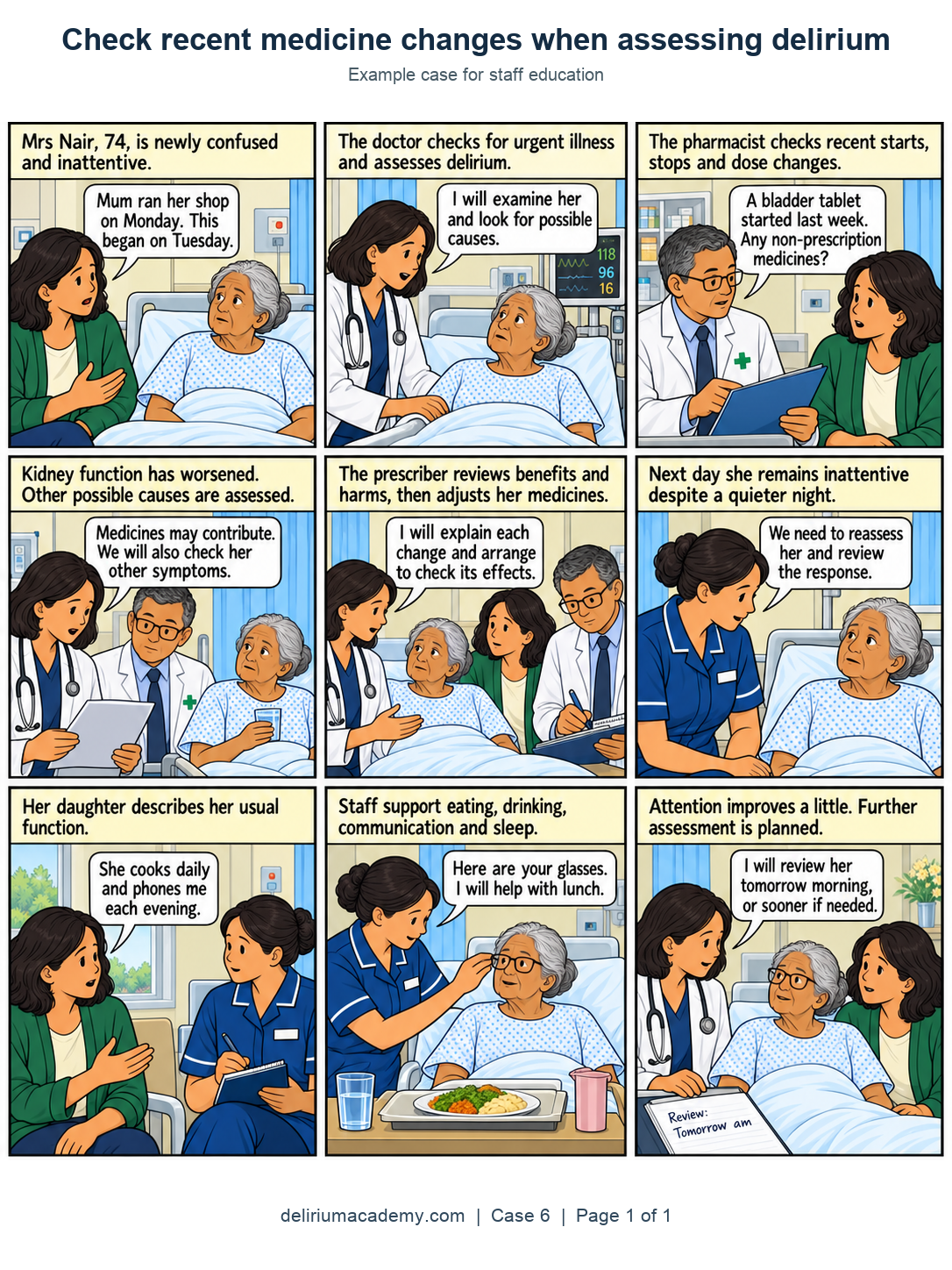
Mrs Nair, 74, is newly confused and inattentive.
Read the case transcript
Page 1
Panel 1
Mrs Nair, 74, is newly confused and inattentive.
Daughter: Mum ran her shop on Monday. This began on Tuesday.
Panel 2
The doctor checks for urgent illness and assesses delirium.
Doctor: I will examine her and look for possible causes.
Panel 3
The pharmacist checks recent starts, stops and dose changes.
Pharmacist: A bladder tablet started last week. Any non-prescription medicines?
Panel 4
Kidney function has worsened. Other possible causes are assessed.
Doctor: Medicines may contribute. We will also check her other symptoms.
Panel 5
The prescriber reviews benefits and harms, then adjusts her medicines.
Doctor: I will explain each change and arrange to check its effects.
Panel 6
Next day she remains inattentive despite a quieter night.
Nurse: We need to reassess her and review the response.
Panel 7
Her daughter describes her usual function.
Daughter: She cooks daily and phones me each evening.
Panel 8
Staff support eating, drinking, communication and sleep.
Nurse: Here are your glasses. I will help with lunch.
Panel 9
Attention improves a little. Further assessment is planned.
Doctor: I will review her tomorrow morning, or sooner if needed.
Commentary
Check which medicines have recently been started, stopped or changed in dose. Consider them alongside other possible causes of delirium. After treatment changes, assess the response and continue help with daily care.