Before Delirium in 30
New to healthcare?
Start here
The words and ideas you need before learning about delirium.
If you are new to health or care work, use this short introduction before Delirium in 30. You can take longer, pause or revisit a section. If these ideas are already familiar, go straight to Delirium in 30.
The eight minutes are additional to Delirium in 30. Your workplace induction covers the training and procedures for your job.
What you will learn
Understand words about thinking and alertness; distinguish usual abilities from a new change; explain observations, medicine side effects and the purpose of the 4AT; and know how to report a concern.
Part 1 of 6 · About 1 minute
Start with the person
Example case
Mrs Ahmed usually chats, eats independently and walks with a frame. On her second day in hospital, she is sleepy at times, responds slowly and eats little. Her daughter says this began yesterday.
You may notice a change like this while helping with ordinary care. Describe it and ask for help, even if you do not know its cause.

The brain is part of the body. Illness and some medicines can affect how well it works. A change in someone’s thinking or alertness may be a sign that they are physically unwell.
Tell the responsible nurse or senior member of staff now and ask them to arrange assessment. If the person is very difficult to wake, has severe breathing problems or is rapidly getting worse, use your workplace’s emergency response.
Part 2 of 6 · About 1 minute
Attention, alertness and memory
These words describe different mental abilities. A person may have difficulty with more than one.
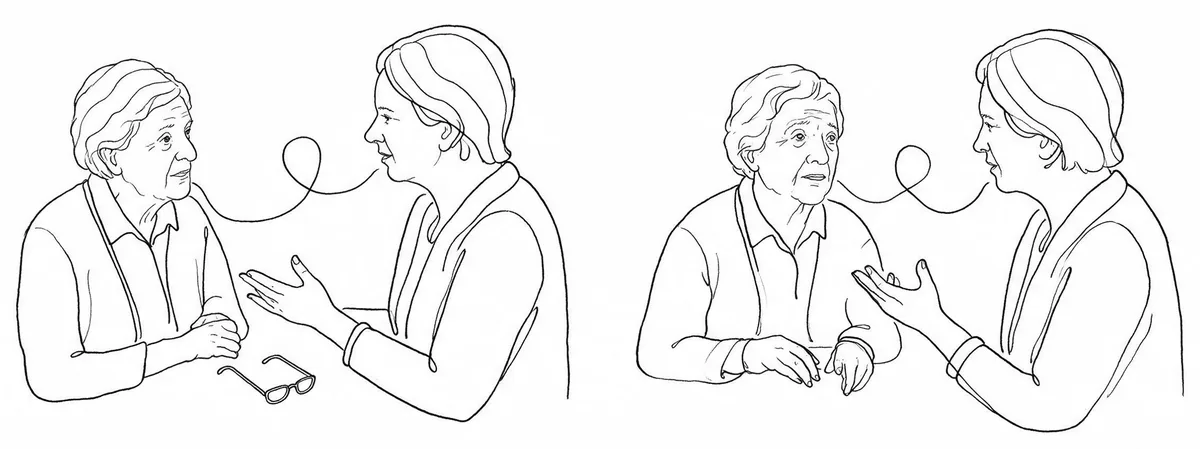
Attention
Focusing on something and staying with it, such as following a conversation.
Alertness
How awake and responsive someone is. A person may be fully awake, unusually sleepy or hard to wake.
Memory
Remembering information or events, such as what happened earlier that day.
Cognition is a general word for mental abilities such as attention, memory and thinking.
If someone struggles to follow you, check that they can hear and understand. Help them use hearing aids or glasses if needed. Ask a colleague for help with language or other communication difficulties. Describe what you notice; one difficult conversation does not establish a diagnosis.
When someone struggles to follow you
Part 3 of 6 · About 1 minute
Usual abilities and a new change
Baseline means what the person is usually like before a new problem: how they think, communicate and manage everyday activities. Ask the person and people who know them.
Acute means developing over a short time, usually hours or days in this course. Fluctuation means that a change varies over time: someone may be more alert at one point and more drowsy later.
Usual abilities, then a new change
| Delirium | Dementia |
|---|---|
| A change developing over hours or days, affecting attention and other mental abilities. It often occurs during illness. | An ongoing decline in mental abilities that affects daily life. It usually develops over months or years. |
A person can have both. Mrs Ahmed has dementia, but her daughter describes a new change. That needs urgent assessment. A more alert spell later would not remove the need to report it.

Part 4 of 6 · About 1 minute
Observations and medicines
In healthcare, observations or vital signs often mean measurements such as temperature, pulse (heartbeat), breathing rate, blood pressure and oxygen level in the blood. Staff use them alongside how the person looks, feels and responds.

Only take or interpret measurements you have been taught and are authorised to use. You can report a change before measurements are available. One reassuring reading does not cancel a concern.
Medicines are used to treat or prevent illness or relieve symptoms. A side effect is an unwanted effect of a medicine. Some medicines can cause sleepiness or difficulty concentrating.
Report a new change and any recent medicine changes you know about. The cause needs assessment. Do not alter someone’s medicines yourself unless this is part of your authorised role.
Part 5 of 6 · About 1 minute
Assessment and asking for help
An assessment means gathering information and checking the person’s condition. A diagnosis is a decision about what condition they have, made by a professional with the appropriate training.
The 4AT is a short assessment for possible delirium and problems with mental abilities. A clinician, a health professional who assesses or treats patients, interprets it alongside other information. A score is one part of the assessment needed for a diagnosis.
What to do when you notice a change
If help does not arrive or the person gets worse, seek urgent help again.
“Mrs Ahmed usually chats. She is much sleepier and eating little. Her daughter says this began yesterday. I am worried. Please arrange assessment now.”
Example report
Confirm who will assess the person and when. If help does not arrive or the person worsens, seek urgent help again. This is escalation. In a care home, use the urgent medical assessment route; do not wait for a routine visit.
Emergency care takes priority over finishing questions or measurements. Follow your training, explain what you are doing and speak calmly to the person.
Part 6 of 6 · About 3 minutes
Check your understanding
Choose an answer to each question, then read the explanations. You can review the teaching and try again.
Connect this to your workplace
If you are unsure, ask your supervisor. Keep patient details out of this note. It is not saved when the page closes.