Follow-on module
Safety, distress and agitation in delirium
Keep the person, other patients and staff safe when delirium makes care hard

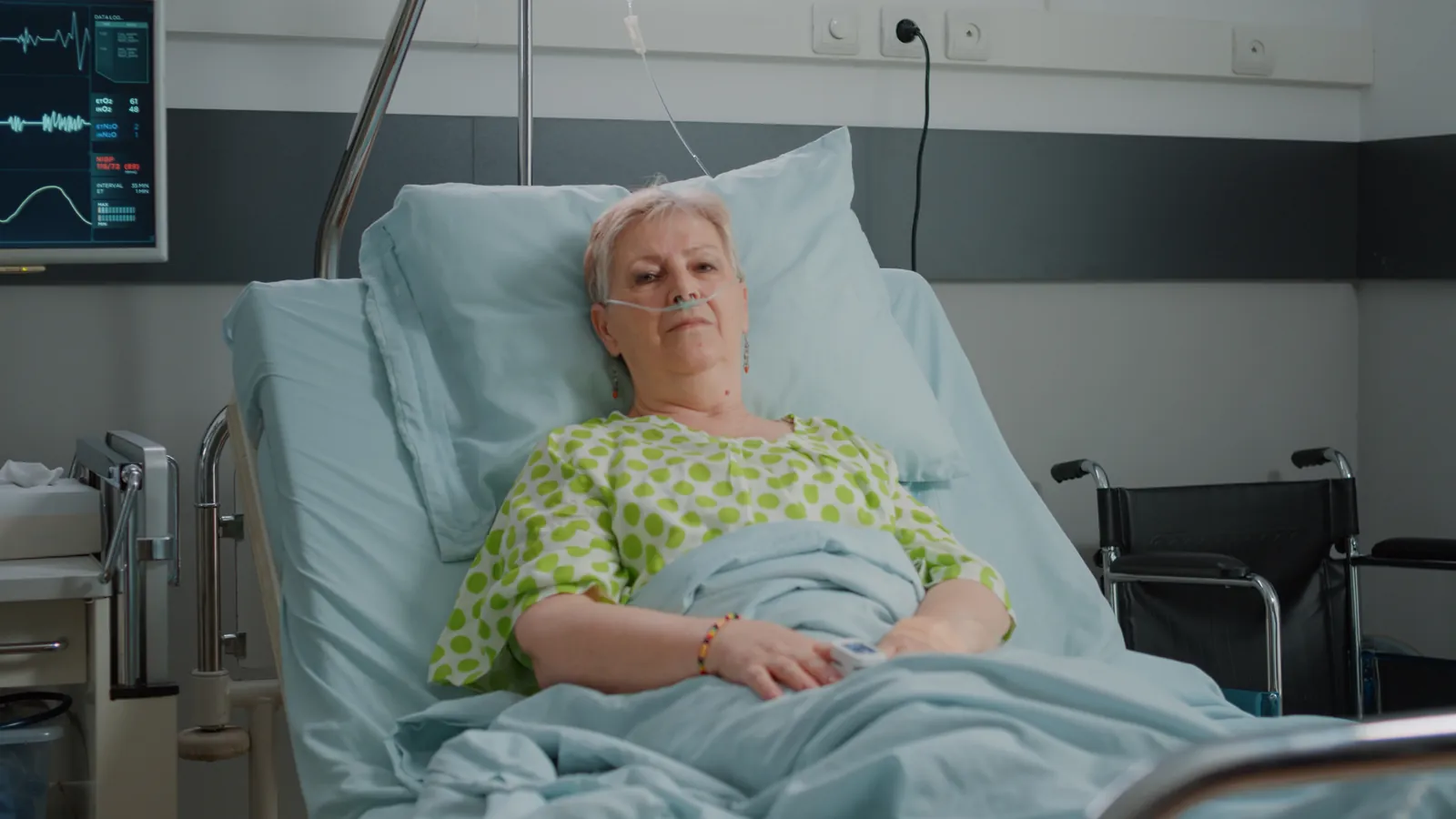
Some people with delirium become highly agitated. They shout, hit out, pull at drips and tubes, climb out of bed or try to leave. Others lie still and say little while they become dehydrated, develop pressure ulcers or choke on food. Both presentations involve risks of harm that care can reduce.
This module covers the first minute, finding the cause, what to say, preventing falls and other harms, keeping staff safe, the limited place of medicines, and difficult situations that training often leaves out.
This module assumes you know how delirium presents, how it is assessed and why its causes must be found. If you need an introduction, start with Delirium in 30.
What you should be able to do afterwards
- Decide in the first minute whether a situation needs the emergency response or time to slow down.
- Look for common causes of agitation and distress, including pain, a full bladder and fear.
- Use the two stages of therapeutic engagement.
- Choose words that reduce fear without arguing with or agreeing to false beliefs.
- Prevent falls, pressure ulcers, choking and other harms in agitated and drowsy people.
- Keep yourself and colleagues safe, and know what to do if you are hurt.
- Explain the limited place of medicines and the checks they need.
- Respond to difficult situations, including refused treatment, leaving at night and requests to “just sedate him”.
What this module does not teach
Physical restraint techniques, rapid tranquillisation, drug doses, mental health and capacity law, and specialist intensive care practice need local training and competence. Apply the law, policies and emergency routes where you work.
No account is required. It works on a phone. Read or print the whole module on one page.
Part 1 of 13 · About 2 minutes
When delirium makes care hard
Example case
Mr Lee, 72, was admitted with pneumonia. Since this morning he has struggled to follow conversation. He believes staff are holding him prisoner. When a nurse goes to adjust his oxygen, he pushes her hand away, shouts and tries to climb over the bed rail. His daughter is frightened. Another patient is within reach.
Trying to climb out of bed
This brief simulated scene illustrates the risk of falling in the case above. Watch the man’s movement as staff approach.
Text alternative
A distressed older man grips the bed rails and lifts a knee as he tries to climb out. Staff approach. The clip ends before anyone touches him.
Situations like this are common on hospital wards and in care homes. The person is ill and frightened. Staff want to help and to stay safe. Other patients and visitors are affected too.
Two kinds of danger
Agitated (hyperactive delirium)
- Falls and fractures from climbing out of bed or walking unsteadily
- Drips, catheters, feeding tubes and oxygen pulled out
- Injury to staff, visitors and other patients
- Leaving the ward or home, often at night
- Harm from sedation or restraint
Drowsy and withdrawn (hypoactive delirium)
- Pressure ulcers after hours without moving
- Choking, and pneumonia from food or drink entering the lungs
- Dehydration and weight loss
- Pain, fear and deterioration that nobody notices
- Falls when the person tries to get up without help
Many people move between the two during the same illness. Plan care around what the person can do now, and review it through the day.
Sources: NICE CG103; NICE NG10
Part 2 of 13 · About 3 minutes
The first minute
Stop and look before you approach. In the first minute, decide which of two situations you are in.
- 1. Look first, from a safe distance
- 2. Is anyone in immediate danger, or is the person seriously unwell?Very drowsy or hard to wake, breathing difficulty, collapse or seizure, rapidly getting worse, an object held as a weapon, or violence happening now.
- If yes: use the emergency responseCall the clinical emergency team or security, as your setting requires. Keep your distance and a way out. Move other people away. Keep talking from a safe place.
- If no: slow downPause care that can wait. One person speaks. Fewer people, less noise. Explain before you approach or touch. Look for the cause.
- Getting worse, or you feel unsafe?Step back and call help.
A delirium score or a conversation should never delay emergency treatment. Low oxygen, low blood glucose, sepsis, stroke, seizures, a head injury after a fall, alcohol withdrawal and severe pain can all show as sudden agitation or drowsiness.
When you call for help, give your location, what is happening, how unwell the person is and what help you need.
When it is a medical emergency
A simulated scene at home. The carer stops asking questions and acts.
Text alternative
An older man in an armchair is much sleepier than usual. The carer asks, “Mr Bell, can you hear me? Are you short of breath?” He says, “Can’t catch my breath.” She tells him she is calling emergency services and staying with him, then tells the call handler: “I need an ambulance for an older man who has become very drowsy and is struggling to breathe. He’s responding slowly. I am with him now.”
Think about it: On a ward the same rule applies: stop the conversation and use the emergency response.
Use space
Text of the animation
A plan of a bay shows the patient in bed, the door and a member of staff. The staff member moves to stand at an angle near the bed, out of reach, without blocking the way to the door. Labels read: avoid blocking the exit where safely possible; you: side-on, one voice, hands visible.
Stand at an angle rather than face on, with your hands visible and open. Stay out of arm’s reach until the person is calmer. Keep your own way out clear and, where it is safe, avoid blocking theirs. Do not approach from behind, and do not corner the person.
Family members and other patients should never be asked to hold, lift or restrain someone. Ask them to step back, and involve them in calming the person only when it is safe.
Sources: NICE NG10; NICE CG103
Part 3 of 13 · About 2 minutes
Look for the cause
Text of the animation
Text on screen: Agitation in delirium needs assessment. Look for possible causes of agitation. Possible causes: urinary retention, very common; pain, very common; constipation; dehydration and thirst; a specific fear, ask what it is; something they can see that you can’t. Find it. Treat it. The agitation often lessens.
Agitation and distress usually have causes, and some can be found and treated within minutes. Check the common ones every time, and ask a clinician to look for the medical causes of the delirium itself.
- PainLook for grimacing, guarding and pulling away during care. Ask “Are you in pain?” and ask the person to point. Pain is often missed when a person is unable to describe it.
- A full bladder or a blocked catheterUrinary retention is common and very uncomfortable. Check the catheter and bag; a bladder scan takes minutes.
- ConstipationCheck the bowel chart and ask.
- Thirst, hunger, heat or coldOffer a drink, food, a blanket or a fan.
- Needing the toiletOffer help to the toilet regularly, including at night.
- Low oxygen or low blood glucoseCheck oxygen levels and blood glucose.
- FearOf staff, a procedure, or something the person sees or believes. Ask what it is.
- WithdrawalFrom alcohol, nicotine or regular medicines such as benzodiazepines.
- MedicinesNew sedatives, opioids and medicines with anticholinergic effects can worsen delirium. Ask for a medicines review.
- Surroundings and devicesNoise, bright light at night, bed moves, missing glasses or hearing aids, and uncomfortable drips, catheters or masks.
Mr Lewis keeps trying to stand. A staff member asks whether he is in pain or needs the toilet. He points to where it hurts and says he needs the toilet. The team checks his pain and helps him safely.
For a fuller approach to causes, see Identifying triggers of delirium.
Sources: NICE CG103; NICE NG31
Part 4 of 13 · About 3 minutes
Therapeutic engagement
Text of the animation
Text on screen: Therapeutic engagement. Two stages, in this order. 1, Assessment: know the person, the informant history; observe from the end of the bed before speaking; introduce yourself; ask how they are feeling; allow time for conversation, if possible; if conversation is difficult: simple yes or no questions. 2, Response: orientation and honest explanation; reassurance; talk about familiar people and interests; activity and mobilisation; family involvement; every passing member of staff. Assessment before response. Find out what the person needs. Then respond.
Therapeutic engagement means using your attention, words and actions to understand what the person is going through and to help them feel safer. It has two stages, in this order.
Find out how the person is feeling
- Learn about the person from family and records: their usual self, what calms them and what frightens them.
- Look from the end of the bed for a few seconds before speaking, for signs of fear, pain or agitation.
- Introduce yourself and use the person’s preferred name.
- Ask: “How are you feeling?” “Is anything bothering you?”
- If conversation is hard, ask simple yes or no questions: “Are you in pain?” “Are you frightened?” “Are you thirsty?” “Would you like to speak to your daughter?”
Respond with information, reassurance and company
- Explain where they are, why they are here and what is happening now. Keep it short and repeat it as often as needed, without testing them.
- Reassure truthfully: “You’re safe. I’ll stay with you for a few minutes.”
- Talk about familiar things: “Where did you grow up?” “What work did you do?”
- Offer company, something to do and a chance to move.
- Involve family and staff the person knows.
Stage 1 often finds the cause: the person tells you about the pain, the full bladder or the fear. Explain before every procedure, however small. Ask permission where you can, and stop if the person says no, unless it is an emergency.
Stop, explain, then ask
A simulated scene. The staff member starts without explaining, then puts it right.
Text alternative
A woman sitting in a chair asks, “What are you doing?” A staff member wearing gloves says he just needs a blood sample. She says, “No. Stop.” He stops at once, introduces himself as Sam, explains that the doctor asked for a blood test to help find out why she is unwell, and agrees that he should have explained first. He describes each step and says he will not start unless she agrees. She asks him to wait a moment, and he waits.
Think about it: Putting it right took less than a minute. If an essential test or treatment is still refused, ask a senior colleague for help. Part 7 covers this.
People who remember delirium in intensive care describe fear, anger and shame. They valued staff who were kind, explained what was happening and stayed with them (Boehm and colleagues, 2021).
Sources: Boehm and colleagues (2021); McCartney and colleagues (2025); NICE CG103
Part 5 of 13 · About 3 minutes
Words that help
Some develop frightening beliefs, such as believing staff intend to harm them. These are called delusions.
De-escalation means using words, actions and changes to the surroundings to reduce distress and the risk of harm. It is a way of responding to the person, and no script works every time.
- One person speaks. Use short sentences, one idea at a time, and wait for an answer.
- Name the feeling: “You look frightened.” You do not need to agree with a false belief, and arguing tends to make it stronger.
- Offer small, safe choices: “Would you like to sit in the chair or on the bed?”
- Keep your voice low and slow. Avoid threats, sarcasm and promises you may be unable to keep.
- Say only what is true.
What the person says, and replies that often help
- “You’re trying to poison me.”“That sounds frightening. I’m Sam, one of the nurses. Tell me what’s worrying you about the drink.”
- “Get them off me! Get them away!”“That sounds terrible. What can you see?” Then respond sensitively and reassure the person that they are safe.
- “I’m going home. Get out of my way.”“You want to get home. Who’s there waiting for you? Walk with me and tell me about it.” Then deal with the worry behind it and offer a safe choice.
- “Where’s my daughter? I want my daughter!”“Your daughter went home tonight. She’s coming back in the morning. I’ll stay with you for a while.” Say this only if it is true; if you do not know, say you will find out.
- “No! Stop!” during washing or a procedure“I’ve stopped. Does something hurt?” Pause if the care can wait, and check for pain.
- “You’re useless. I want a proper nurse.”Do not argue or defend yourself: “I’m sorry this is so hard. I’m here to help. What do you need right now?” If the abuse continues, step away and ask a colleague to try.
When the person sees something you do not
A simulated scene.
Text alternative
An older woman in bed looks terrified and reaches into the air, calling, “Get them off! Get them away from me!” A nurse takes her hand and says, “I’m here, Lynn. Hold my hand. You’re safe.”
Think about it: Offering a hand helped here, but touch frightens some people. Ask, and watch the response.
Text of the animation
Text on screen: They can see something that is not there. Don’t argue with it. Don’t play along either. There is a third position. “I can’t see what you’re seeing. But I can see that it’s very real to you.” “You’re safe with me.” Honest about your reality. Kind about theirs.
Delirium does not by itself mean that a person lacks capacity. Capacity is about a specific decision at a specific time. If a decision can wait, try again when the person is better able to take part. If it has to be made now, follow the law and local procedure where you work and involve a senior clinician. Relatives can tell you about the person’s wishes, but they may not have legal authority to decide.
Sources: NICE NG10; NICE NG108
Part 6 of 13 · About 3 minutes
Falls, pressure ulcers and other harms
Text of the animation
Text on screen: Drowsy and withdrawn people with delirium can be seriously unwell. What staff may see: quiet; drowsy; eyes on the ceiling; “no bother at all”. What survivors tell us: terrified; completely lost; unable to ask for help; hoping somebody would notice. Stillness is not comfort. Go and find out.
Agitation draws attention. A person who is drowsy and withdrawn can come to serious harm unnoticed. Plan care around what the person can do now, which can change within hours.
Falls
People with delirium stand without warning, forget that they need help and misjudge distances. Use a low bed. Keep the call bell, glasses, walking aid and a drink within reach. Offer the toilet regularly, especially at night, and supervise walking. Bed rails can lead to climbing and entrapment and need their own assessment. After a fall, check for injury before moving the person and follow your post-fall procedure. A head injury in someone taking anticoagulants (blood thinners) needs urgent medical review.
Pressure ulcers
A person lying still for hours can develop pressure ulcers (pressure sores), especially over the heels, hips and bottom. Follow the repositioning plan, check the skin each time, keep it clean and dry, and help with eating and drinking. Report red or broken skin the same day.
Choking and aspiration
Drowsiness can make swallowing unsafe. Sit the person upright and check that they are alert before offering food, drink or tablets. Stop if they cough, splutter or develop a wet, gurgling voice. Do not give food, drink or oral medicines while swallowing is unsafe; ask for a swallowing assessment and a plan for fluids, nutrition and essential medicines. If choking stops the person breathing or coughing effectively, call the emergency response and start choking first aid within your training.
Dehydration and poor nutrition
People with delirium often eat and drink too little. Offer drinks often, help with meals, record what is taken and report when intake falls.
Drips, tubes and oxygen
Ask every day which devices are still needed, and remove what is not. Keep the rest out of sight and reach where possible, for example with a sleeve over a cannula, and explain their purpose each time.
Leaving the ward
Some people try to leave, often at night and often to get home or find family. Know your local procedure for a person missing from the ward or home.
Close observation
Enhanced or one-to-one observation works best when the observer engages with the person: talking, offering drinks, helping with the toilet and walking together. If the agreed observation or staffing is not available, tell the nurse in charge, record it and agree an interim plan. A relative may want to stay and may help, but a relative does not replace staffing.
Sources: NICE CG103; Australian Delirium Clinical Care Standard (2021)
Part 7 of 13 · About 2 minutes
Essential treatment and restraint
Sometimes the person refuses or removes treatment they need: antibiotics by mouth or through a drip, oxygen, insulin, fluids, a feeding tube or a catheter. This is one of the hardest situations in delirium care, and there is no perfect answer.
When the person refuses treatment
In this short simulated scene, a frightened patient refuses a tablet. The guidance below covers how the nurse should respond.
Text alternative
An older patient in a hospital bed pulls the blanket close and raises a hand as a nurse offers a tablet. The patient refuses and says it is poison. The nurse remains beside the bed when the clip ends.
What should the nurse do next? Stop offering the tablet, give the person space and ask what worries them. Explain the treatment and give them time if possible. If it is essential now, ask a senior clinician to review what is needed and how to give it.
- Is it essential now? Could the treatment be given another way, at another time, or stopped? Tablets may replace a drip, nasal oxygen may replace a mask, and an unneeded catheter can be removed.
- Try engagement first. Explain, give time, and try a different member of staff or a familiar person.
- Involve a senior clinician early. They assess the person’s capacity for this decision and make a plan under the law where you work.
- If treatment has to be given without agreement, it follows that law and local procedure, uses the least restrictive approach and is recorded: what was done, why, and who decided.
Restraint means any action that restricts movement or behaviour: holding a person, mittens, bed rails used to stop someone getting out, tilted chairs, a table fixed in front of a chair, and medicines given to control behaviour.
Use it only to prevent serious harm when other approaches have failed or are impossible, for the shortest time, by trained staff, with monitoring and senior review. Never use restriction as punishment or for convenience. Restraint can cause injury, fear and more agitation, and it does not reliably stop a person falling or removing a tube.
Never restrain anyone in a way that affects breathing or circulation, for example by pressing on the chest, neck or abdomen. Avoid taking a person to the floor; if it happens, keep them face up where possible.
Sources: NICE NG10; NICE NG108; NICE CG103
Part 8 of 13 · About 2 minutes
Your safety and your team’s

Staff should be able to give care without accepting avoidable injury. Knowing that illness is driving the behaviour helps you respond with care. You are still entitled to stay safe.
- Know how to call for help before you need it: the emergency number, security and the nurse in charge.
- Keep personal space and a way out. Do not approach from behind or corner the person.
- Where it is safe, move things that could be thrown or used to hit.
- Follow your lone working arrangements, especially in care homes and people’s own homes.
In an incident, agree three roles
Trained security staff can help with immediate safety. The clinical team stays responsible for assessment and treatment.
Racist, sexual or abusive behaviour
Delirium can remove a person’s usual self-control. You may hear racist, sexual or abusive remarks, or be touched inappropriately. You do not have to put up with it in silence. Stop, step back if you need to, and say calmly and briefly that it is not acceptable. Ask a colleague to take over where possible. Report it, even when illness is the cause, so that the team can plan the person’s care and support you.
If you are hurt
Get first aid or medical care, report the injury and tell the nurse in charge. Take a break away from the area. Feeling shocked, angry or upset is common. Ask for a debrief and use staff support services. Being hurt is not a sign that you did something wrong.
Record what happened in specific words. “Hit a staff member on the arm when the catheter was touched” tells the next team more than “aggressive”.
Sources: NICE NG10
Part 9 of 13 · About 3 minutes
Medicines: last and limited
Text of the animation
Text on screen: Care before medication. Assess causes and provide care. 1, find and treat the causes. 2, comfort: pain, bladder, thirst, warmth. 3, orientation, reassurance, family. 4, medication: severe distress or immediate danger only, low dose, reviewed daily. Use medication only when indicated. Continue assessment, treatment and care.
Antipsychotics do not treat the underlying causes of delirium. Antipsychotics have not been shown to shorten delirium or hospital stay or to reduce deaths, and they are not recommended to prevent delirium or to speed recovery.
There is no drug treatment for delirium itself. Never prescribe an antipsychotic or benzodiazepine simply because a person has delirium.
- There is significant distress, or a risk of physical harm to the person or others.
- Causes have been looked for and treated as far as possible.
- Attempts to reduce distress without medicine have failed, or an emergency makes them unsuitable.
An authorised prescriber makes and records the decision, including the target symptom, the dose and when it will be reviewed.
Haloperidol must not be used in Parkinson’s disease or dementia with Lewy bodies (MHRA; UK product information). Before haloperidol, the MHRA advises a baseline ECG and correction of any electrolyte problems. Other antipsychotics also need specialist judgement in these conditions.
After a medicine
Watch breathing, alertness and the person’s response according to the local protocol. Becoming still after a medicine does not prove that distress or the illness has improved. Excessive sleepiness, breathing problems, stiffness, restlessness or new difficulty swallowing need prompt clinical review.
Benzodiazepines, a group of sedative medicines, are generally avoided in delirium unless there is a specific reason, such as alcohol or benzodiazepine withdrawal.
In the last days of life
When delirium occurs in the last days of life, relieving distress becomes the main aim. Look for pain, a full bladder or constipation first, then follow palliative care guidance, which includes medicines for agitation and delirium.
This course does not give drug doses or rapid tranquillisation regimens. Guidance differs between countries; use current local guidance. Before transfer or discharge, stop medicines started for the episode or record a plan to stop them.
Sources: APA guideline (2025); Nikooie and colleagues (2019); MHRA haloperidol advice; NICE NG31; NICE CG103
Part 10 of 13 · About 2 minutes
Intensive care
Example case
Ms Mensah, 56, is receiving mechanical ventilation through a breathing tube. As her sedation is reduced, she looks frightened and reaches for the tube. She is unable to speak. A member of staff tries to explain several things at once.
Threats to the airway or essential devices need immediate help. Call the bedside nurse, senior clinician or emergency team under your unit’s procedure. Assess pain, breathing, oxygen levels, medicine effects or withdrawal, and difficulty communicating. Agitation during a change in sedation is not enough, on its own, to diagnose delirium. Restraint does not reliably prevent a person removing a tube and can increase agitation; the ICU team weighs the alternatives.
Use one speaker and short explanations. Agree a way to communicate, such as nods, hand squeezes or a letter or picture board. Check glasses and hearing aids, and involve a familiar person if appropriate. Explain procedures even when the person seems unresponsive.
Three separate questions
RASS rates agitation and sedation only. It is not a delirium assessment and does not give a 4AT result. Deep sedation or unresponsiveness can prevent a valid delirium assessment.
The 2025 SCCM PADIS focused update found insufficient evidence to recommend for or against antipsychotics for treating delirium in intensive care. Sedation choices and emergency drug regimens belong to the ICU team and its protocols.
Sources: SCCM PADIS focused update (2025); SCCM PADIS (2018); ICU Liberation
Part 11 of 13 · About 3 minutes
Hard calls
These situations happen on hospital wards and in care homes every day. None has a perfect answer, but some responses are clearly safer than others. Choose an answer for each, then check it.
Two in the morning
A simulated scene.
Text alternative
At night, an older man is packing his belongings into plastic bags. He shouts, “I am going home now! They are waiting for me!” A nurse comes to him and says, “Samuel, it’s two in the morning. Let’s sit together a minute. You’re safe here.”
Leaving at night
A relative asks for sedation
Not enough staff
You have been hurt
A report of harm
Last days of life
Sources: NICE NG108; NICE NG31; NICE NG10
Part 12 of 13 · About 2 minutes
After the episode
When the immediate danger has passed, reassess the person’s physical condition, comfort and remaining risks. Check for injury and for effects of any medicine or restraint. Review the causes, the devices still in place and the level of observation.
Talk with the person when they are able. Many people remember delirium, often as frightening. Listen without assuming their memories are wrong, and explain what happened. Avoid blame, and never ask a person to apologise for symptoms of illness. Offer the family information and a chance to ask questions.
Support the staff involved. Report the incident under local policy and hold a short debrief: what happened before the episode, what helped, what made it worse, and what the team will change.
- What changed, and when
- What may be causing it
- What the person is experiencing, and what helps
- Risks now: falls, devices, swallowing, skin, leaving
- Medicines given and their effects
- Who will review, and when
“Mr Lee became frightened and agitated at 14:00 and tried to climb over the bed rail. He thought the oxygen tubing was holding him down. Pain and low oxygen were treated, and he is calmer with his daughter present and one person speaking. He is at risk of falls and of pulling off his oxygen. No medicines were given. Dr Lee will review him at 18:00.”
Know your local arrangements
- How to call clinical emergency help, and help with violence or aggression.
- Who can review persistent distress, medicines and decisions about restriction.
- How to get an interpreter, communication aids and extra staff for observation.
- What to do if a patient goes missing.
- How staff and patients are supported after an incident.
For educators: allow extra time to rehearse with local policies. Completing this course records learning; clinical skills need supervised practice and local assessment.
Sources: NICE CG103; NICE NG10
Part 13 of 13 · About 5 minutes
Check your understanding
Answer all 10 questions, then read the explanations. For a completion certificate, score at least 8 out of 10 and answer the five safety questions (1, 4, 5, 7 and 8, marked below) correctly. You can review the teaching and try again.
Keep patient names and identifying details out of this box.
The name and reflection stay in this page and are not saved when it closes.
Certificate of completion
Safety, distress and agitation in delirium
Completed the teaching and assessment requirements, including the five safety questions, and confirmed review of answer feedback.
Planned study time: 35 minutes · Builds on Delirium in 30 · Course version 2.0 · Delirium Academy
This certificate records completion of the online course.
Further learning
Choose what you need next: Distress in delirium, Identifying triggers of delirium, Communication in delirium care, Persistent delirium or the 4AT illustrated cases. To revise the basics, return to Delirium in 30.