Clinical examples
Illustrated cases
Forty cases exploring delirium, from the first change in someone’s thinking to assessment, treatment and recovery. Open a case to read the comic, commentary and transcript.
The 12 illustrated 4AT cases form a separate collection.
Search titles, clinical topics, dialogue and commentary.
40 cases
No cases found. Try a broader term or clear the search.
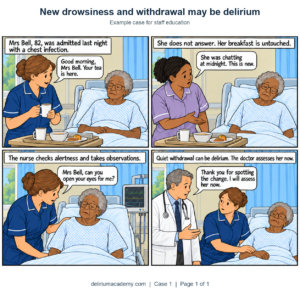 Case 1
New drowsiness and withdrawal may be delirium
Assess a person who has become drowsy or withdrawn and look for possible causes.
Read case · 1 page →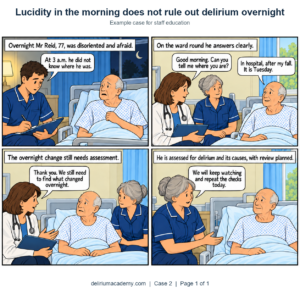 Case 2
Lucidity in the morning does not rule out delirium overnight
Ask about recent changes even when the person answers clearly during your assessment.
Read case · 1 page →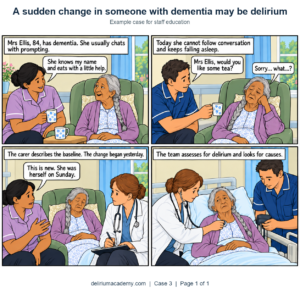 Case 3
A sudden change in someone with dementia may be delirium
Find out how the person usually is and assess any sudden change in attention or alertness.
Read case · 1 page →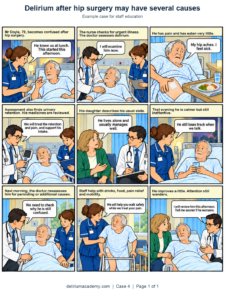 Case 4
Delirium after hip surgery may have several causes
Treat possible causes, continue daily care and reassess symptoms that persist.
Read case · 1 page →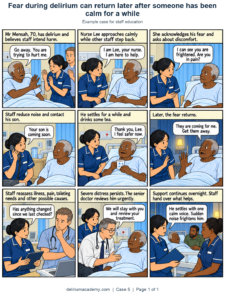 Case 5
Fear returning after a period of calm
Continue support, reassess possible causes of distress and seek senior review if severe distress persists.
Read case · 1 page →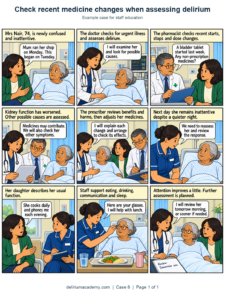 Case 6
Check recent medicine changes when assessing delirium
Review medicines and other possible causes, then check the effects of any treatment changes.
Read case · 1 page →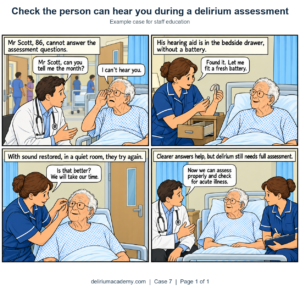 Case 7
Check the person can hear you during a delirium assessment
Help the person hear and communicate, then continue the full assessment for delirium.
Read case · 1 page →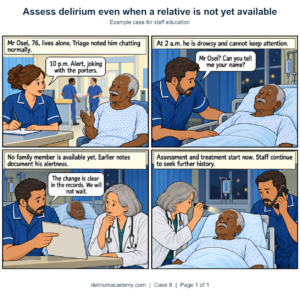 Case 8
Assess delirium even when a relative is not yet available
Use staff observations and earlier records while seeking more information about the person.
Read case · 1 page →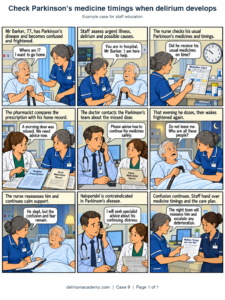 Case 9
Check Parkinson’s medicine timings when delirium develops
Assess possible causes, give Parkinson’s medicines at the usual times and seek specialist advice.
Read case · 1 page →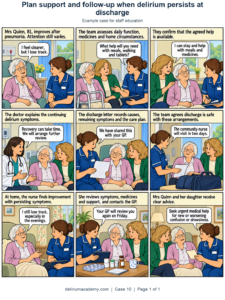 Case 10
Plan support and follow-up when delirium persists at discharge
Check safety, confirm the help available and explain when to seek urgent medical help.
Read case · 1 page →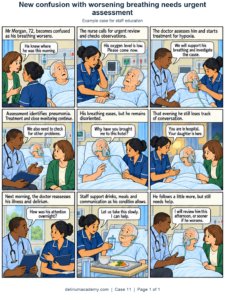 Case 11
New confusion with worsening breathing needs urgent assessment
Assess and treat the acute illness urgently, then continue delirium assessment and care.
Read case · 1 page →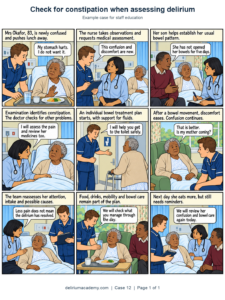 Case 12
Check for constipation when assessing delirium
Ask about bowel movements and discomfort, and continue to look for other possible causes.
Read case · 1 page →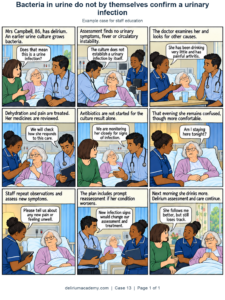 Case 13
Bacteria in urine do not by themselves confirm a urinary infection
In a stable older person without signs of urinary or systemic infection, assess other causes and observe carefully.
Read case · 1 page →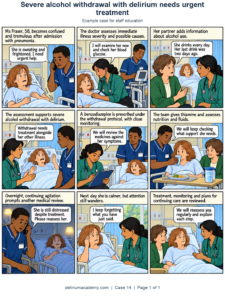 Case 14
Severe alcohol withdrawal with delirium needs urgent treatment
Assess urgently, follow the withdrawal protocol, monitor closely and assess other causes and thiamine needs.
Read case · 1 page →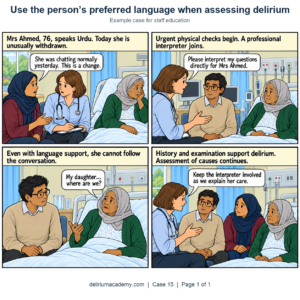 Case 15
Use the person’s preferred language when assessing delirium
Support communication and assess a new change without attributing it to a language barrier.
Read case · 1 page →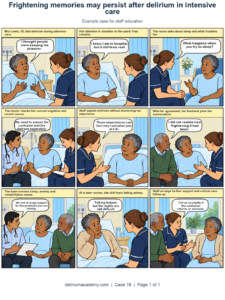 Case 16
Frightening memories may persist after delirium in intensive care
Assess current thinking and distress, explain delirium and arrange appropriate support and follow-up.
Read case · 1 page →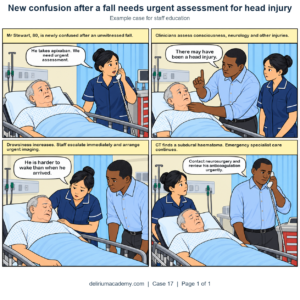 Case 17
New confusion after a fall needs urgent assessment for head injury
Assess urgently and seek prompt help for possible head injury or neurological deterioration.
Read case · 1 page →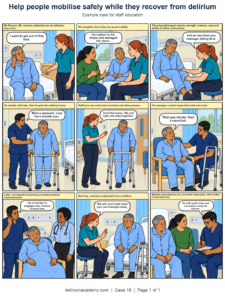 Case 18
Help people mobilise safely while they recover from delirium
Assess movement and daily activities, adapt instructions and respond to changes in alertness.
Read case · 1 page →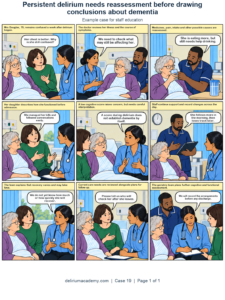 Case 19
Persistent delirium needs reassessment before drawing conclusions about dementia
Review possible causes and arrange further assessment of thinking and daily function.
Read case · 1 page →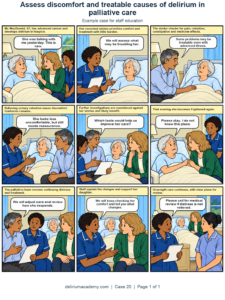 Case 20
Assess discomfort and treatable causes of delirium in palliative care
Consider the person’s wishes and the benefits and burdens of treatment while continuing comfort care.
Read case · 1 page →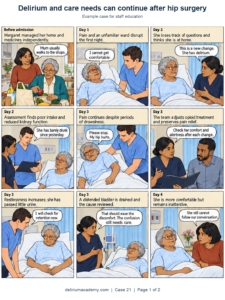 Case 21
Delirium and care needs can continue after hip surgery
Reassess pain, medicines and urinary retention, and continue rehabilitation while delirium persists.
Read case · 2 pages →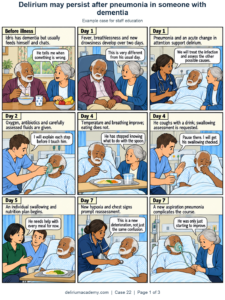 Case 22
Delirium may persist after pneumonia in someone with dementia
Assess continuing delirium and changes in daily abilities after the infection improves.
Read case · 3 pages →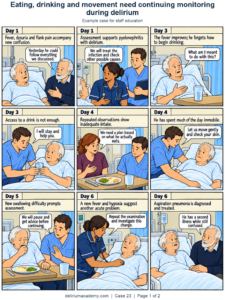 Case 23
Eating, drinking and movement need continuing monitoring during delirium
Help with daily care, assess swallowing problems and investigate new illness during delirium.
Read case · 2 pages →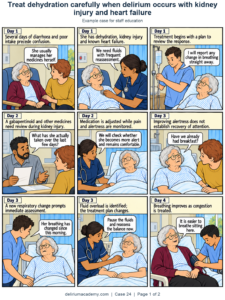 Case 24
Treat dehydration carefully when delirium occurs with kidney injury and heart failure
Review fluids, kidney function, medicines and breathing together while continuing delirium care.
Read case · 2 pages →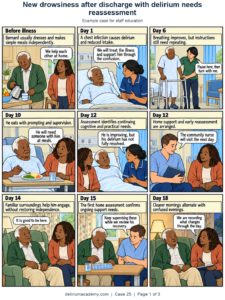 Case 25
New drowsiness after discharge with delirium needs reassessment
Plan continuing support, assess new illness promptly and review care needs as they change.
Read case · 3 pages →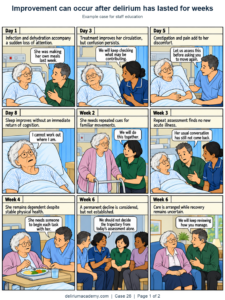 Case 26
Improvement can occur after delirium has lasted for weeks
Continue assessment and rehabilitation, and review care arrangements when abilities change.
Read case · 2 pages →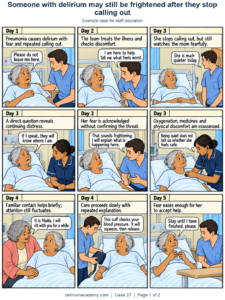 Case 27
Someone with delirium may still be frightened after they stop calling out
Ask about fear and discomfort even when agitation has reduced, and assess distress separately from attention.
Read case · 2 pages →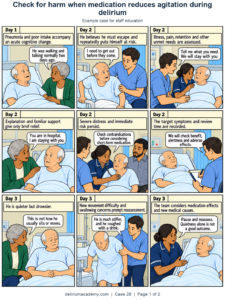 Case 28
Check for harm when medication reduces agitation during delirium
Reassess drowsiness, stiffness and swallowing difficulties after medication, as well as any benefit.
Read case · 2 pages →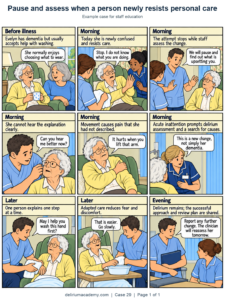 Case 29
Pause and assess when a person newly resists personal care
Check for delirium, pain, hearing difficulties and fear before trying care again.
Read case · 1 page →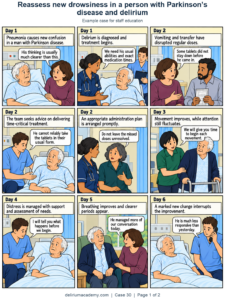 Case 30
Reassess new drowsiness in a person with Parkinson’s disease and delirium
Check for new illness and confirm that Parkinson’s medicines are being given at the right times.
Read case · 2 pages →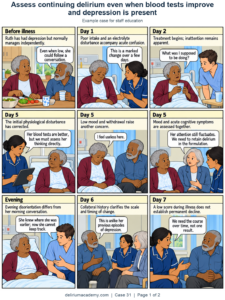 Case 31
Assess continuing delirium even when blood tests improve and depression is present
Assess recent changes in attention and daily abilities alongside mood, physical illness and medicines.
Read case · 2 pages →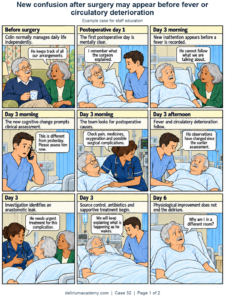 Case 32
New confusion after surgery may appear before fever or circulatory deterioration
Assess new confusion promptly and continue delirium care after treatment of the surgical complication.
Read case · 2 pages →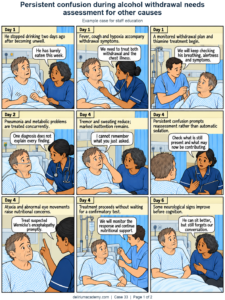 Case 33
Persistent confusion during alcohol withdrawal needs assessment for other causes
Treat withdrawal and nutritional problems while reassessing infection, medicine effects and continuing delirium.
Read case · 2 pages →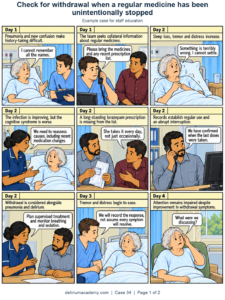 Case 34
Check for withdrawal when a regular medicine has been unintentionally stopped
Find out which medicines were actually taken and when, then plan supervised treatment if withdrawal is suspected.
Read case · 2 pages →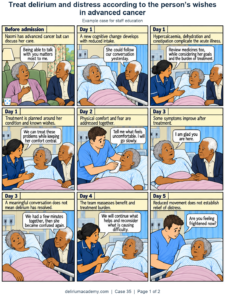 Case 35
Treat delirium and distress according to the person’s wishes in advanced cancer
Assess treatable problems, review benefits and burdens of treatment, and continue comfort care as illness progresses.
Read case · 2 pages →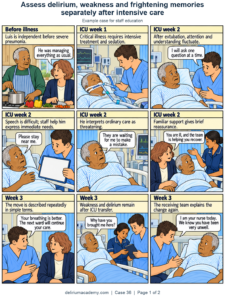 Case 36
Assess delirium, weakness and frightening memories separately after intensive care
Continue physical and cognitive assessment, explain the admission and support discussion of distressing memories.
Read case · 2 pages →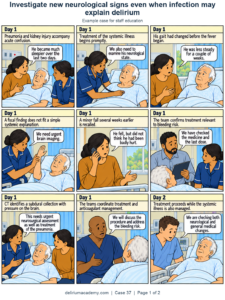 Case 37
Investigate new neurological signs even when infection may explain delirium
Assess possible brain injury alongside pneumonia and continue delirium care after treatment.
Read case · 2 pages →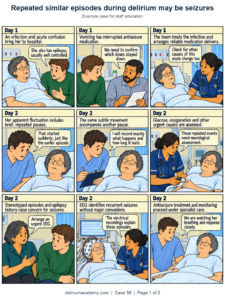 Case 38
Repeated similar episodes during delirium may be seizures
Record each episode carefully and seek neurological assessment when its features suggest seizures.
Read case · 2 pages →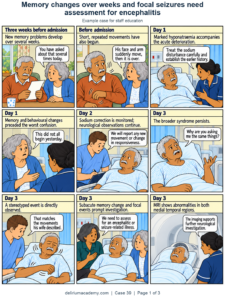 Case 39
Memory changes over weeks and focal seizures need assessment for encephalitis
Investigate the wider neurological illness when correcting low sodium does not explain continuing symptoms.
Read case · 3 pages →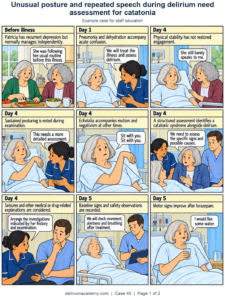 Case 40
Unusual posture and repeated speech during delirium need assessment for catatonia
Assess catatonia and delirium separately, and monitor both benefit and harm from treatment.
Read case · 2 pages →