Example case 20 of 40
Comfort and possible causes
Delirium during palliative care
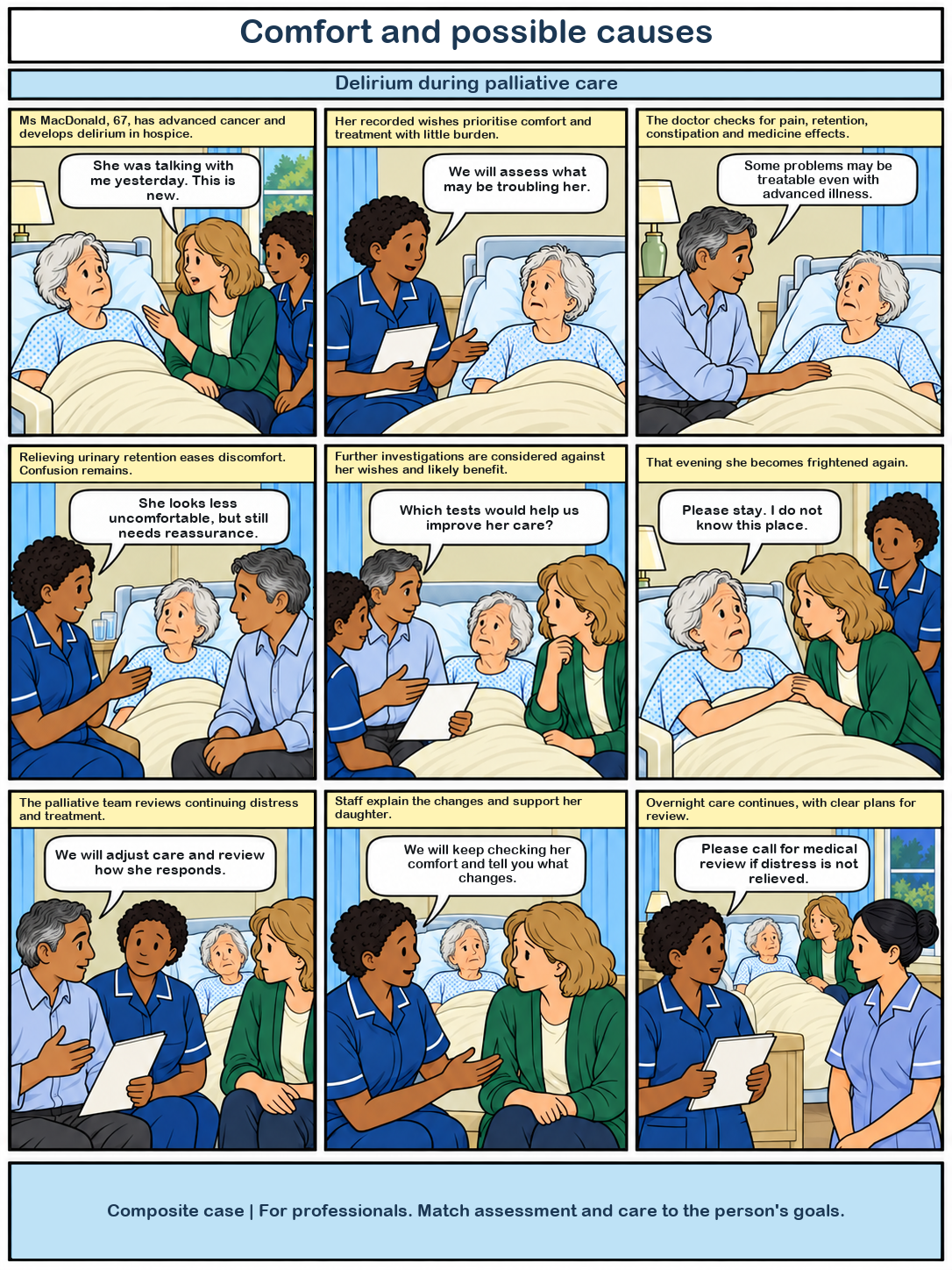
Ms MacDonald, 67, has advanced cancer and develops delirium in hospice.
Click or tap each illustration to enlarge it. The commentary and text transcript follow below.
Read the text transcript
Page 1
Panel 1
Ms MacDonald, 67, has advanced cancer and develops delirium in hospice.
Daughter: She was talking with me yesterday. This is new.
Panel 2
Her recorded wishes prioritise comfort and treatment with little burden.
Nurse Okafor: We will assess what may be troubling her.
Panel 3
The doctor checks for pain, retention, constipation and medicine effects.
Palliative doctor: Some problems may be treatable even with advanced illness.
Panel 4
Relieving urinary retention eases discomfort. Confusion remains.
Nurse Okafor: She looks less uncomfortable, but still needs reassurance.
Panel 5
Further investigations are considered against her wishes and likely benefit.
Palliative doctor: Which tests would help us improve her care?
Panel 6
That evening she becomes frightened again.
Ms MacDonald: Please stay. I do not know this place.
Panel 7
The palliative team reviews continuing distress and treatment.
Palliative doctor: We will adjust care and review how she responds.
Panel 8
Staff explain the changes and support her daughter.
Nurse Okafor: We will keep checking her comfort and tell you what changes.
Panel 9
Overnight care continues, with clear plans for review.
Nurse Okafor: Please call for medical review if distress is not relieved.
Commentary
Assess treatable causes and distress in palliative care, considering the person's wishes and the benefits and burdens of interventions. Continue comfort care and specialist review.
An anonymised composite case that does not describe one identifiable person and is not research evidence.