Example case 10 of 40
Delirium at discharge
Plan support and follow-up
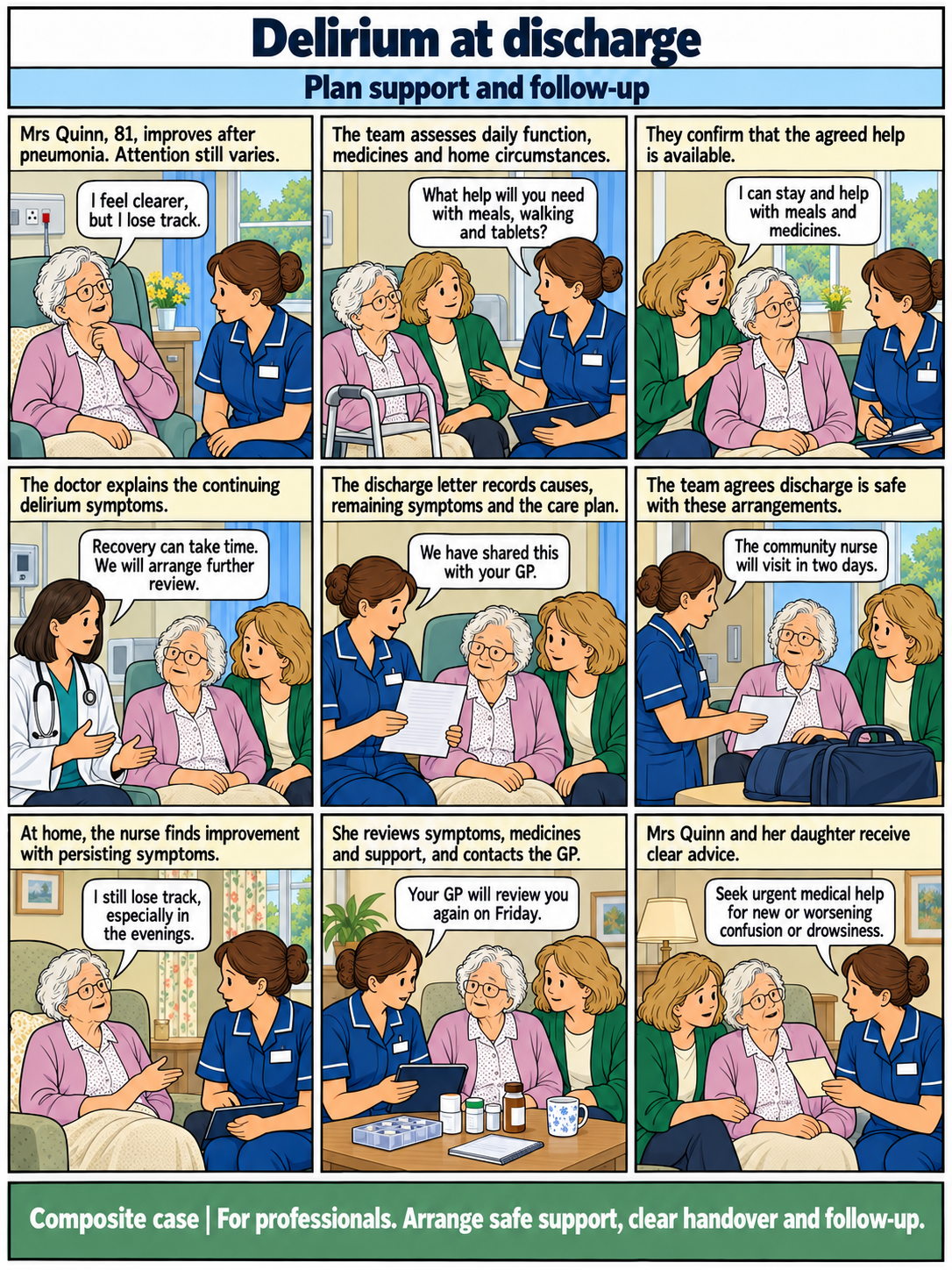
Mrs Quinn, 81, improves after pneumonia. Attention still varies.
Click or tap each illustration to enlarge it. The commentary and text transcript follow below.
Read the text transcript
Page 1
Panel 1
Mrs Quinn, 81, improves after pneumonia. Attention still varies.
Mrs Quinn: I feel clearer, but I lose track.
Panel 2
The team assesses daily function, medicines and home circumstances.
Nurse: What help will you need with meals, walking and tablets?
Panel 3
They confirm that the agreed help is available.
Daughter: I can stay and help with meals and medicines.
Panel 4
The doctor explains the continuing delirium symptoms.
Doctor: Recovery can take time. We will arrange further review.
Panel 5
The discharge letter records causes, remaining symptoms and the care plan.
Nurse: We have shared this with your GP.
Panel 6
The team agrees discharge is safe with these arrangements.
Nurse: The community nurse will visit in two days.
Panel 7
At home, the nurse finds improvement with persisting symptoms.
Mrs Quinn: I still lose track, especially in the evenings.
Panel 8
She reviews symptoms, medicines and support, and contacts the GP.
Nurse: Your GP will review you again on Friday.
Panel 9
Mrs Quinn and her daughter receive clear advice.
Nurse: Seek urgent medical help for new or worsening confusion or drowsiness.
Commentary
Assess safety and support needs before discharge. Record the episode, confirm arrangements and provide follow-up and urgent-help advice.
An anonymised composite case that does not describe one identifiable person and is not research evidence.