Clinical examples
Illustrated cases
Forty cases exploring delirium, from the first change in someone’s thinking to assessment, treatment and recovery. Open a case to read the comic, commentary and transcript.
The 12 illustrated 4AT cases form a separate collection.
Search titles, clinical topics, dialogue and commentary.
40 cases
No cases found. Try a broader term or clear the search.
 Case 1
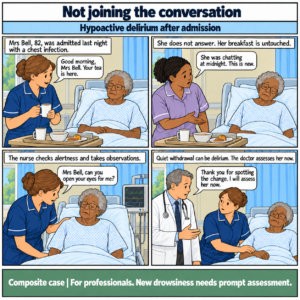
Not joining the conversation
Hypoactive delirium after admission
Read case · 1 page →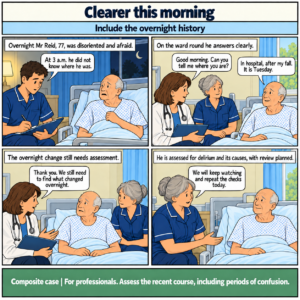 Case 2
Clearer this morning
Include the overnight history
Read case · 1 page →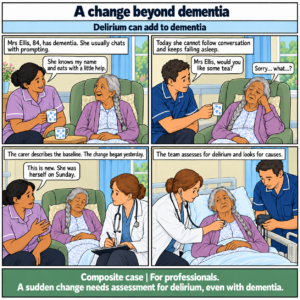 Case 3
A change beyond dementia
Delirium can add to dementia
Read case · 1 page →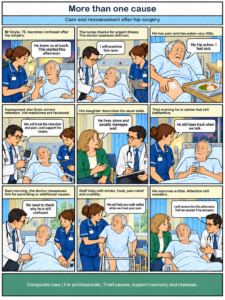 Case 4
More than one cause
Care and reassessment after hip surgery
Read case · 1 page →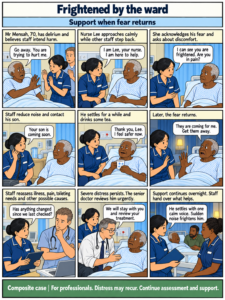 Case 5
Frightened by the ward
Support when fear returns
Read case · 1 page →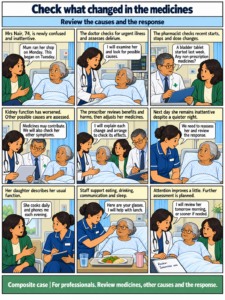 Case 6
Check what changed in the medicines
Review the causes and the response
Read case · 1 page →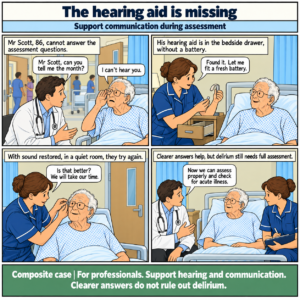 Case 7
The hearing aid is missing
Support communication during assessment
Read case · 1 page →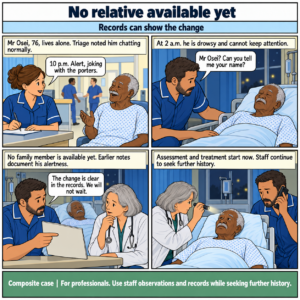 Case 8
No relative available yet
Records can show the change
Read case · 1 page →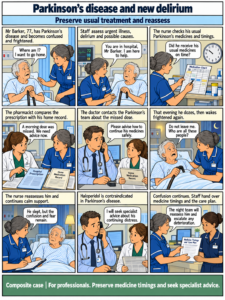 Case 9
Parkinson's disease and new delirium
Preserve usual treatment and reassess
Read case · 1 page →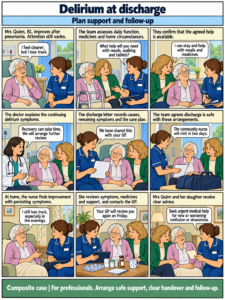 Case 10
Delirium at discharge
Plan support and follow-up
Read case · 1 page →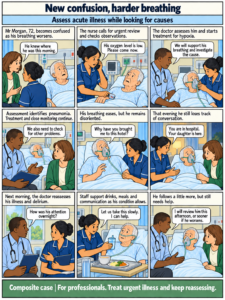 Case 11
New confusion, harder breathing
Assess acute illness while looking for causes
Read case · 1 page →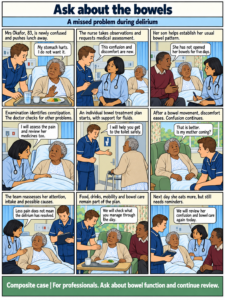 Case 12
Ask about the bowels
A missed problem during delirium
Read case · 1 page →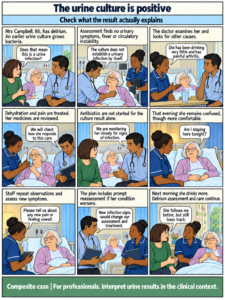 Case 13
The urine culture is positive
Check what the result actually explains
Read case · 1 page →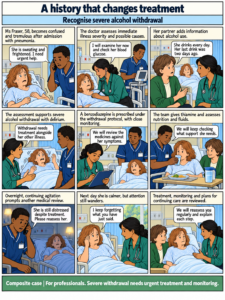 Case 14
A history that changes treatment
Recognise severe alcohol withdrawal
Read case · 1 page →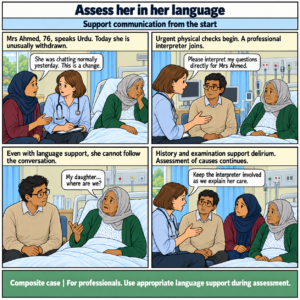 Case 15
Assess her in her language
Support communication from the start
Read case · 1 page →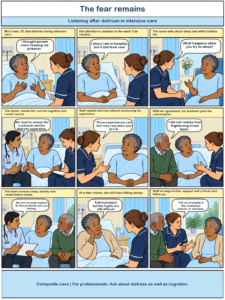 Case 16
The fear remains
Listening after delirium in intensive care
Read case · 1 page →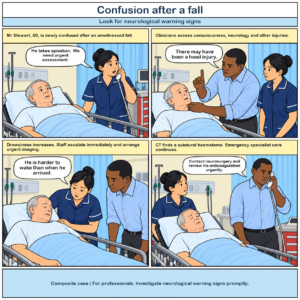 Case 17
Confusion after a fall
Look for neurological warning signs
Read case · 1 page →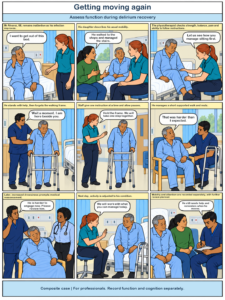 Case 18
Getting moving again
Assess function during delirium recovery
Read case · 1 page →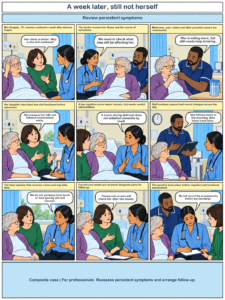 Case 19
A week later, still not herself
Review persistent symptoms
Read case · 1 page →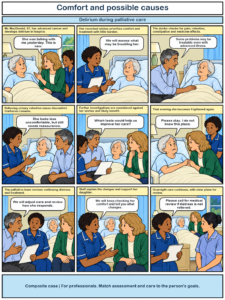 Case 20
Comfort and possible causes
Delirium during palliative care
Read case · 1 page →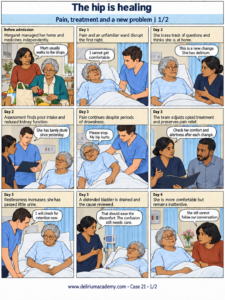 Case 21
The hip is healing
Reassess pain, medicines and retention while continuing rehabilitation during delirium.
Read case · 2 pages →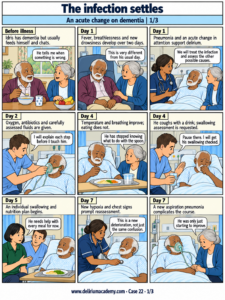 Case 22
The infection settles
Distinguish physiological stability, persistent delirium and longer-term cognitive disability in dementia.
Read case · 3 pages →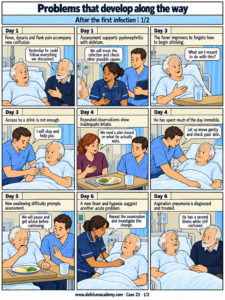 Case 23
Problems that develop along the way
Show how poor intake, swallowing difficulty, immobility and device burden complicate delirium.
Read case · 2 pages →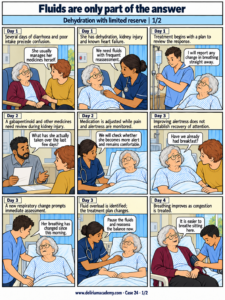 Case 24
Fluids are only part of the answer
Manage dehydration and kidney injury without overlooking fluid overload, drug accumulation or continuing cognitive needs.
Read case · 2 pages →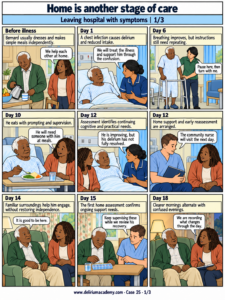 Case 25
Home is another stage of care
Plan for residual symptoms, recognise a new acute illness after discharge and reassess longer-term care needs.
Read case · 3 pages →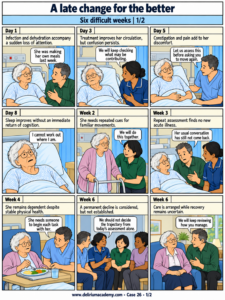 Case 26
A late change for the better
Continue assessment and rehabilitation when a prolonged course has prompted an assumption of permanent decline.
Read case · 2 pages →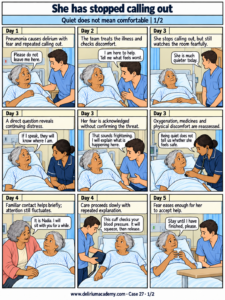 Case 27
She has stopped calling out
Assess subjective distress when agitation reduces but fear and inattention continue.
Read case · 2 pages →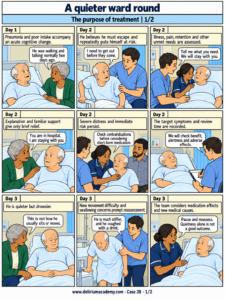 Case 28
A quieter ward round
Observe benefit and harm after symptom-directed medication; reassess cognition and movement separately.
Read case · 2 pages →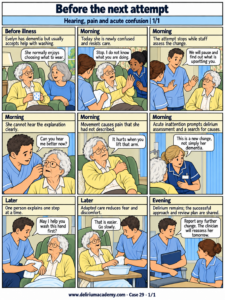 Case 29
Before the next attempt
Interpret resistance during personal care through acute change, pain, hearing and fear.
Read case · 1 page →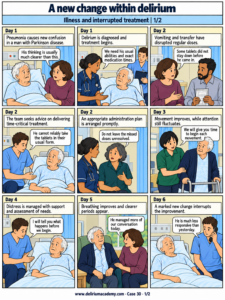 Case 30
A new change within delirium
Avoid attributing fresh drowsiness or rigidity to established delirium; check new illness and medication delivery.
Read case · 2 pages →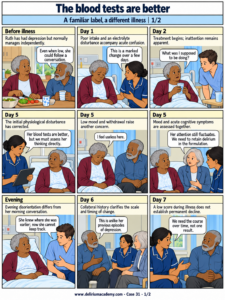 Case 31
The blood tests are better
Retain an acute cognitive formulation when mood symptoms and apparently reassuring laboratory results distract from fluctuating inattention.
Read case · 2 pages →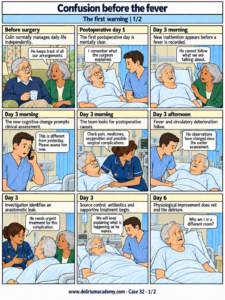 Case 32
Confusion before the fever
Recognise delirium as an early sign of postoperative illness and separate surgical from cognitive recovery.
Read case · 2 pages →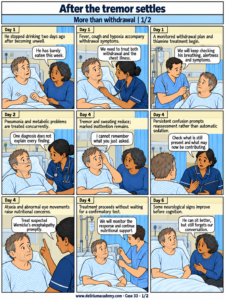 Case 33
After the tremor settles
Treat withdrawal and nutritional risk while reassessing persistent delirium for concurrent illness.
Read case · 2 pages →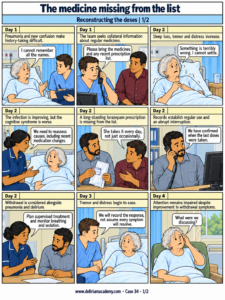 Case 34
The medicine missing from the list
Reconstruct actual medication exposure and identify withdrawal after an unintentional interruption.
Read case · 2 pages →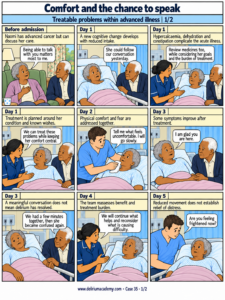 Case 35
Comfort and the chance to speak
Combine assessment of reversible contributors with goals of care, symptom relief and an uncertain end-of-life course.
Read case · 2 pages →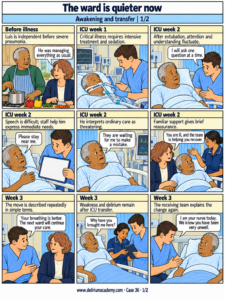 Case 36
The ward is quieter now
Separate active delirium, weakness and distressing memories across ICU transfer and recovery.
Read case · 2 pages →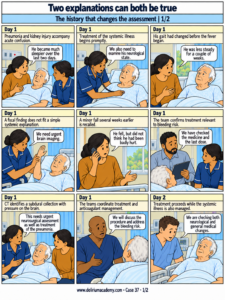 Case 37
Two explanations can both be true
Investigate neurological concern despite a plausible systemic cause, and follow residual delirium after treatment.
Read case · 2 pages →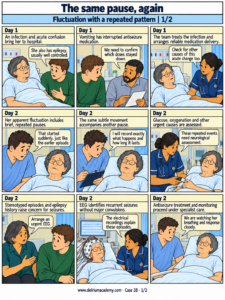 Case 38
The same pause, again
Recognise stereotyped episodes within an apparently fluctuating delirium course and obtain appropriate EEG assessment.
Read case · 2 pages →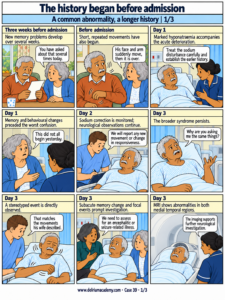 Case 39
The history began before admission
Recognise a subacute encephalitic syndrome when correction of a common abnormality leaves unexplained memory change and focal seizures.
Read case · 3 pages →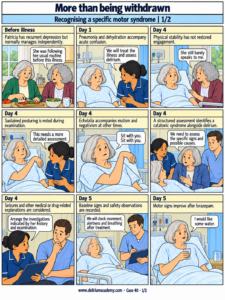 Case 40
More than being withdrawn
Identify specific catatonic signs coexisting with delirium and assess separate responses to treatment.
Read case · 2 pages →